
Teen talent takes charge
Strap (Page 1): Teen innovators across Bangalore are turning curiosity, code & courage into solutions that matter
Strap (Page 8&9): Backed by mentors, city students are building apps, breaking stigma & shaping India’s innovation future
Blurb:
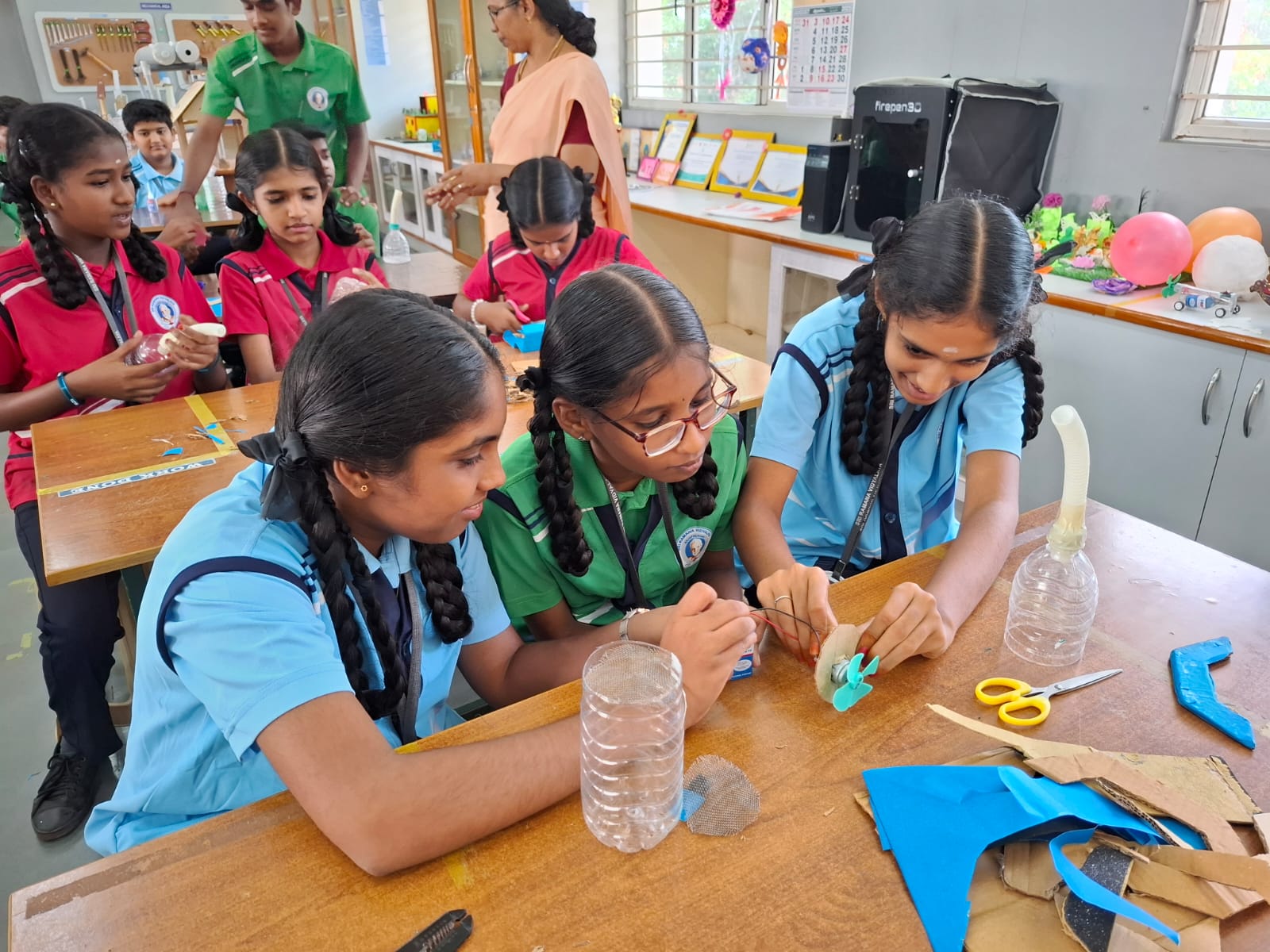
Today, platforms such as the Atal Tinkering Labs and Tinkerpreneur programmes are powering this shift, giving students hands-on exposure to design thinking, technology and entrepreneurship—early, raw and real.
Byline: Bhuvana Shridhar
In the heart of Bangalore’s Silicon Valley, innovation is no longer the preserve of boardrooms and start-up founders in hoodies. It is bubbling up in classrooms, bedrooms and tinkering labs; driven by school students who are bold enough to question the rulebook and young enough to believe they can rewrite it. Armed with curiosity, code and conviction, these teenagers are proving that when it comes to changing the game, age is just a number.
What began as a pandemic-era pivot has snowballed into a full-blown movement. Locked-down homes turned into idea factories, online sessions replaced chalk-and-talk, and students discovered that learning by doing could take them far beyond textbooks.
Today, platforms such as the Atal Tinkering Labs and Tinkerpreneur programmes are powering this shift, giving students hands-on exposure to design thinking, technology and entrepreneurship—early, raw and real.
The results are striking. From apps that help music learners practise without a guru and digital tools that promote sustainable tourism, to grassroots initiatives breaking stigma around neurodiversity, young innovators are tackling problems that matter. They are not waiting for permission; they are building, testing, failing and fixing.
Fuelling this surge is a tight-knit tribe of mentors, teachers, engineers and changemakers, who believe innovation cannot be taught, only experienced. Together, these stories tell a simple, electric truth: when young minds are trusted, guided and unleashed, they don’t just dream big; they deliver.
Age no bar, advantage plenty
For Meghana Doddipalle, the disruption of 2021 proved to be a launchpad rather than a setback. As the COVID-19 pandemic upended classrooms and routines, it also triggered a moment of reflection; one that pushed her to look beyond conventional learning and explore what technology could enable.
Instead of slowing down, Meghana leaned in. She signed up for the Entrepreneur Bootcamp Tinkerpreneur under the Atal Tinkering Labs (ATL) Mission, a Government of India initiative, and began experimenting with ideas that blended creativity, culture and problem-solving. Today, as a Class 10 student at Harvest International School, HSR Layout, she speaks of that phase as the beginning of a journey that has only gathered momentum.
“There has been no looking back. I have been actively involved in many creative projects,” she says. With the guidance of her mentors, Meghana launched her maiden product, Swara Saathi; a Carnatic music app designed to help learners practise and progress seamlessly, even in the absence of a personal guru. The app, rooted in tradition but powered by technology, reflects a hallmark of this generation’s thinking – respect for legacy, paired with modern solutions.
Her innovation journey did not stop there. Meghana went on to work in Kanyakumari, where she developed Trail Tourist Resource Allocation, an eco-friendly digital solution aimed at regulating tourist footfall at sensitive locations.
“It was driven by a strong conviction that sustainability should be shared,” she explains. The hands-on experience, she adds, deepened her interest in sustainable innovation and showed her how technology can support responsible development.
Behind these achievements lies a strong mentoring backbone. Meghana is quick to acknowledge the role played by Kiran Kumar HS and Phaneendra J. “None of this would have been possible without their guidance,” she says, adding, “They held up a mirror to my potential even when my vision was blurred. Their encouragement and patience helped me refine my ideas and build confidence.”
Crucially, the mentors helped her move beyond ideation. From conducting a biomimicry webinar for the AIM Marathon to exploring schools and conducting workshops, Meghana’s projects made the leap from her laptop to national platforms. Her message to peers, often articulated through her TED Talks, is simple but compelling – young people are capable of driving meaningful change when given trust, tools and timely support.
Breaking stigma, building inclusion
Innovation, for many young changemakers, is as much about social impact as it is about technology. Creating awareness, breaking stigma and expanding opportunities for neurodivergent children has become a powerful focus area.
Jeya Malhotra, a 16-year-old changemaker, TEDx speaker and founder of Khwaish, Bangalore, sees inclusion as non-negotiable. “What began as a grassroots effort has now grown internationally,” she says, pointing to Khwaish’s expansion to countries such as Spain. Through awareness programmes, the initiative has directly impacted over 1,500 students.
Jeya is also currently conducting research as the youngest Research Fellow at the Neurodiversity Foundation in the Netherlands. As a core founding member of the National Team at Tinker Champs, she mentors students in digital skills, entrepreneurship and changemaking. “When students are given mentorship, their focus improves and impact multiplies,” she says.
She credits her mentors and parents for their unwavering support, describing their role as life-changing. For Jeya, the journey reinforces a central truth echoed across the ecosystem: innovation flourishes where belief meets backing.
How innovation takes root early
These journeys mirror a wider shift taking place across schools in Bangalore. Atal Tinkering Labs have fundamentally altered how students think, learn and act. When students from Classes 6 to 12 are given the freedom to explore, build and question, innovation stops being an abstract concept and becomes a lived experience.
Phaneendra J, Senior Physics Expert and Mentor at Atal Tinkering Labs, believes that innovation and entrepreneurship cannot be taught through theory alone. “Students must experience the entire journey – identifying problems, understanding users, building solutions, failing and improving. That experience is what truly develops an entrepreneurial mindset,” he says.
His mentoring approach centres on helping students see opportunity in problems. Using a five-step design-thinking process, students are guided to empathise with users, ideate creatively, prototype solutions and test them in real-world contexts. Platforms such as Tinkerpreneur programmes, school idea contests, Smart India Hackathons and innovation marathons, he notes, provide hands-on exposure to 21st-century skills.
“These experiences sharpen critical thinking, collaboration, communication, leadership and resilience. These are skills that are essential for students’ future careers,” Phaneendra says.
Student-led initiatives sit at the heart of this ecosystem. According to him, youngsters who were initially hesitant to voice ideas now pitch confidently, implement plans, analyse outcomes, interview users, gather feedback and make informed choices. The transformation, he says, is visible not just in outcomes, but in confidence.
Much of this mentoring happens online, underscoring that geography is no barrier to innovation. “What matters is the right mindset, guidance and ecosystem that encourages experimentation,” Phaneendra explains. “We are not just preparing future engineers or entrepreneurs—we are shaping confident problem-solvers and responsible innovators who can contribute meaningfully to society.”
Think big, dream bold
At the centre of Bangalore’s thriving ATL ecosystem is Kiran Kumar HS, whose relentless passion has ignited young minds to envision limitless possibilities. As Senior Regional Manager at Atal Tinkering Labs, he has played a pivotal role in shaping the city’s innovation culture and inspiring a broader national movement among school students.
“While youth energy is clearly surging, enthusiasm must be matched with mentorship,” he says. Over the years, he has helped groom a generation of national and international award winners, not just from Bangalore, but from across the country.
The approach, Kiran explains, is deliberate. Dedicated students are identified and provided structured upskilling, creative thinking inputs, design skills and exposure to electronics. “Our goal is to provide flexibility and trust, and bring out the absolute best in every young innovator,” he says.
The results speak for themselves.
Nurturing innovation from the start
For Gayathri Manikutty, Regional Mentor for Change under AIM’s Mentor India programme, fostering an innovation mindset early is critical to encouraging entrepreneurship. She points out that institutions such as Amrita Vishwa Vidyapeetham have actively joined the effort by providing mentors and resources to school students.
“We are shaping the future of India’s young entrepreneurial landscape and contributing to the nation’s growth in intellectual property,” she says.
Students are guided through the entire journey; from ideation and design to feedback and real-world constraints. A multi-year recipient of the AIM–NITI Aayog ‘Gem Mentor of Change’ award, Gayathri has seen first-hand how creativity often gets boxed in by conventional learning models.
“Young students are brimming with potential. What they need is encouragement and timely support to nurture their curiosity,” she says. With the right mentoring, she adds, students are empowered to explore, innovate and lead.
As these stories from Bangalore and beyond show, the future of innovation is not waiting in the wings. It is already here—curious, confident and unafraid to experiment. And if there is one lesson this movement drives home, it is this: when young minds are trusted early, they do not just imagine change. They build it.
BOX |
Recent milestones: Bangalore chapter
The human impact of tinkering
The success of the ATL ecosystem is best reflected in the achievements of its students:
- Maanya Ramesh (Air Force School, Hebbal): Developed the Smart Duster to tackle classroom chalk dust, winning a Rs 50,000 grant. She later secured a Rs 1 lakh grant for her Virtual Dispute Resolution Platform, which ranked among the Top 10 innovations nationally from 96,000 entries.
- Jeya (Air Force School, Jalahalli): Founded Khwaish, a digital venture supporting intellectually challenged children. She won the Diana Award and the National Youth Award, India’s highest civilian honour for youth.
- Meghana (Harvest International School): A leader in the Tinker Champs initiative, she conducted Maker Faires reaching over 6,500 peers and emerged as one of India’s youngest TEDx speakers.
- Yuvathi (Haryana): Incubated S-Women, a digital venture addressing female hygiene needs, becoming one of the country’s youngest entrepreneurs after topping the Atal Catalyst programme.