
What city wants in 2026
Slug: PART-II
HL: What city wants in 2026
Strap: From footpaths to culture, Bangalore’s 2026 wish is repair, care, civic sense and a gentler urban future
Byline: Bindu Gopal Rao
If Part I of our “What city wants in 2029” captured the city’s quiet unease, Part II listens to its grassroots. As 2026 unfolds, Bangalore’s message is unmistakable. This is not a city chasing the future at breakneck speed. It is a city asking to slow down, to repair what is broken, to remember what made it special and to choose people over concrete. Away from the din of growth charts and grand visions, Bangalore’s wishlist in 2026 turns inward towards calm, care and civic sense. Part II of this story is not about ambition. It is about care. Read on…
‘Nature’s central to emotional wellbeing’
I have watched Bangalore grow, and I have watched it grow restless too. Once known as the garden city, it now struggles with congestion, noise and an increasing distance from nature. As the city expands, I believe the way we live within it must evolve. Calm, in today’s Bangalore, is no longer a luxury or an aspiration. It is essential.
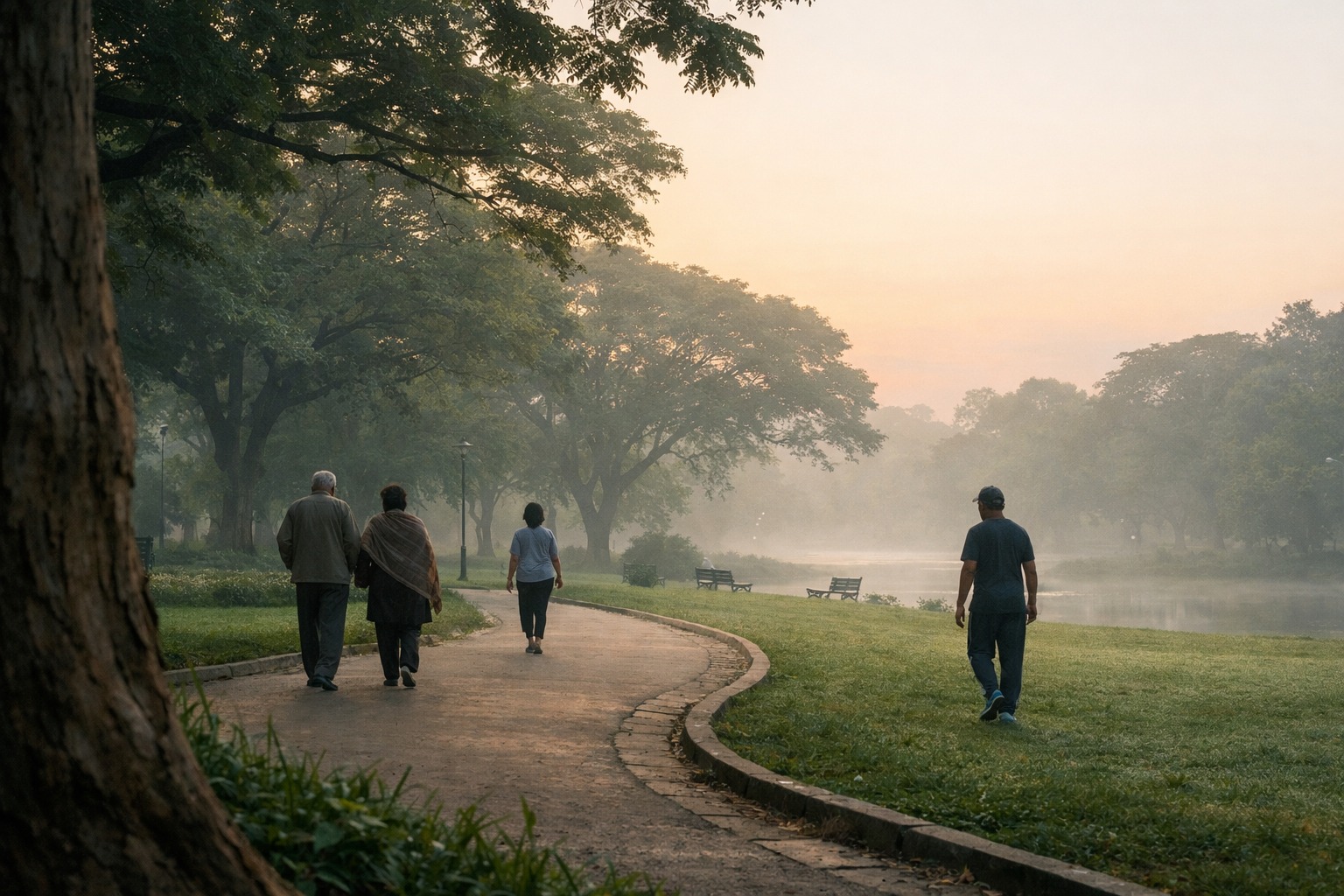
Nature is not decoration for good living; it is central to emotional wellbeing. Access to green spaces, natural light and open air directly shapes how people feel and function daily. Living away from the most crowded pockets creates a slower, grounded rhythm, where mornings begin with birdsong instead of traffic, and evenings offer quiet reflection rather than constant stimulation. Such environments naturally restore balance and mindfulness.
I also sense a renewed pull towards older ways of living. Homes once revolved around courtyards, verandahs and gardens, with nature embedded into everyday life. Reinterpreting these principles today means integrating modern living with sensitivity, designing spaces that respect light, air, greenery and silence. Choosing to live closer to nature is not nostalgia. It is a deliberate choice for peace, resilience and long-term wellbeing in a city that must relearn how to breathe again.
Prashant Kajaria, MD, SPA Group
……………………………………………………………………………………………………………………..
‘I want Bangalore to reclaim itself’
I want Bangalore to remember who it was before it became obsessed with parks, golf courses and upgrades. I dream of a museum and archive for the fast-fading farming community that shaped this city, with audio-visual stories of ordinary lives, not factories, industries or celebrities. Our public spaces need statues that reflect Bangaloreans at work and play, not recycled figures of unrecognisable netas.
I want women to feel genuinely safe, free to move and commute at any hour, in every corner of the city. I want people to fall in love with Kannada culture naturally, not defensively, so ‘kannad gottilla’ slowly becomes ‘swalpa swalpa Kannada barutte’. Traffic chaos demands practical fixes too – staggered school, college and office timings, and a basic civic understanding that roads outside homes are not private parking lots.
We must slow the madness of instant delivery to protect delivery workers and, perhaps, our own health. Cameras and dustbins should be everywhere. Education must be affordable, children must sing and play real music, and parks must host shared activities, not just walkers. Rainwater harvesting should be compulsory, shade democratic, and ambition modest. I am not asking for Shanghai or Singapore. I am asking Bangalore to reclaim wisdom.
- A. Anil Kumar, Artist & Art Historian
………………………………………………………………………………………………………………………
‘Bangalore is our shared responsibility’
I have always seen Bangalore as many cities in one – a garden city, an IT capital, and a friendly place where Kannadigas and people from other regions coexist to create a truly cosmopolitan culture. But with a massive influx of population, the pressure on the city is undeniable. For Bangalore to function better, the government must urgently upgrade roads, expand the Metro, strengthen suburban rail, and ensure seamless connections between all three.
Yet this cannot be the government’s job alone. As citizens, we must own our share of responsibility. We need to start by parking our vehicles inside our homes instead of turning public roads into private garages. Near busy commercial hubs, multistorey parking facilities are essential to unclog streets and restore movement. Most importantly, we must use public transport far more consistently to ease congestion and make daily travel faster and smoother.
Decongesting roads also means cleaning up our habits. Segregating wet and dry waste at homes, apartments and offices, keeping medical waste separate, can dramatically reduce landfill pressure and improve air quality. None of this is dramatic or headline-grabbing. These are small, practical steps. But taken together, they can make Bangalore cleaner, calmer and more liveable.
- Vishwanath, Chairperson IIID, Bengaluru Regional Chapter
………………………………………………………………………………………………………………………
‘I want Bangaloreans to invest in the city’
In 2026, I want Bangalore to become a city that is better understood, not just better marketed. I want people to feel a sense of belonging, to care about the city rather than merely pass through it for work. Too many treat Bangalore as an office address. I want them to engage with it, to explore its many layers without silos. Say, its tech legacy, its diverse neighbourhoods and its rich cultural heritage.
For me, the future of the city lies in participation. When people step out of their bubbles and experience Bangalore beyond their routines, the city begins to make sense. That is the emotion we are trying to spark through UnboxingBLR. We are building platforms that bring government, citizens and innovators to the same table, encouraging conversation, collaboration and shared responsibility.
My hope for 2026 is simple. I want Bangalore to be a city where people don’t just earn a living, but invest their pride, curiosity and care to help Bangalore grow without losing its soul.
Malini Goyal, Co-Founder & CEO, UnboxingBLR