
Messi, meet our game
Strap: India worships football icons with fervour, yet leaves its domestic game starved of faith, funds & futures
Blurb
One heartening moment was the reception accorded to Indian football legend Sunil Chhetri by a packed Wankhede Stadium. Chhetri drew cheers rivalling those for Messi himself.
Byline: Rakesh Ganesh
Lionel Messi’s India tour, polished and powered by heavyweight corporate backing, did more than just light up stadiums and timelines, it exposed an uncomfortable truth about Indian football. The frenzy around a global icon once again underlined how international superstars command far greater devotion than homegrown players, often at the cost of nurturing local talent.
What was meant to be a once-in-a-generation celebration of football began in chaos. Lionel Messi’s much-hyped arrival in India kicked off on a volatile note at Kolkata’s Salt Lake Stadium, where sky-high ticket prices met shattered expectations. Fans who paid a premium for a glimpse of the global icon were left seething when Messi’s appearance, brief, tightly guarded and fleeting, ended almost as soon as it began.
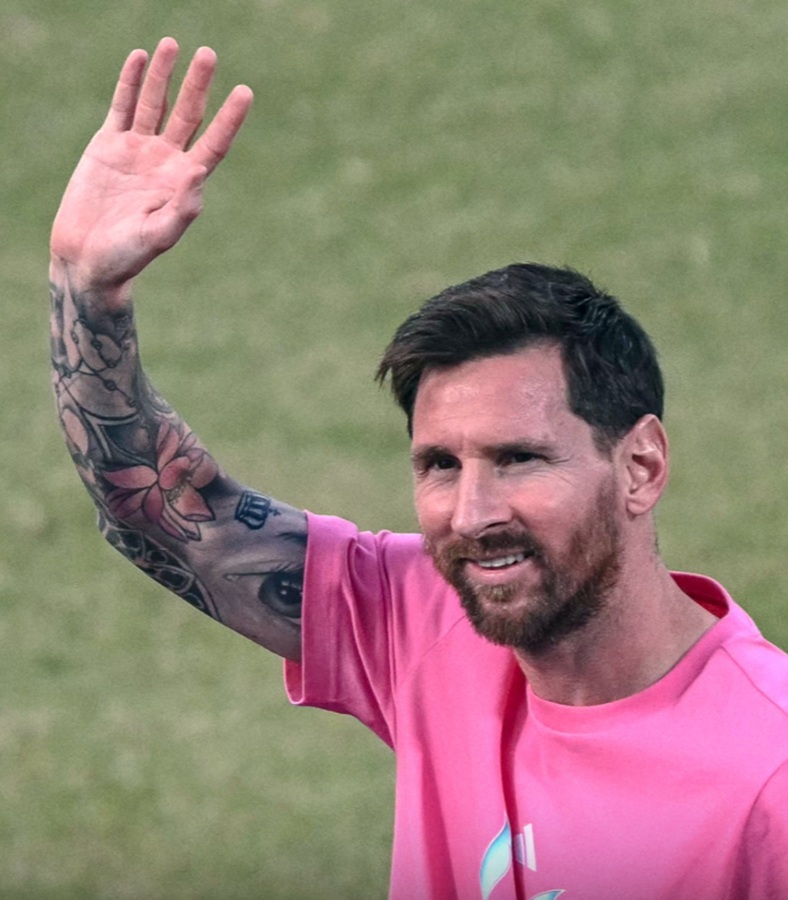
Frustration spilled over into fury, with seats ripped apart and hurled onto the pitch, turning awe into anarchy in a matter of minutes. Hyderabad, the next stop, offered a stark contrast. Lessons were learned, logistics tightened, and the madness gave way to order. Messi was able to stroll freely around the stadium, unencumbered by chaos, smiling and waving alongside Luis Suárez and Rodrigo De Paul as fans cheered from a respectful distance.
The tour then rolled on smoothly, Mumbai followed, where a packed Wankhede Stadium embraced Messi with thunderous applause, before the caravan finally reached the capital, Delhi. Mumbai, however, stood out as the high point of the tour. There was no repeat of Kolkata’s disorder, even if the country’s ever-present VVIP culture lingered in the background.
One heartening moment was the reception accorded to Indian football legend Sunil Chhetri, who drew cheers rivalling those for Messi himself. Yet that warmth was quickly tempered by discomfort. Despite his stature, Chhetri was asked to don a Messi fan jersey, a visual that left many uneasy. Messi, gracious as ever, gifted Chhetri a signed Argentina World Cup-winning jersey, a classy gesture that only sharpened the question – why wasn’t an Indian jersey ready for exchange?
Beyond the spectacle and celebrity presence, with politicians and Bollywood stars jostling for the spotlight, the tour also sparked a deeper debate. Olympic gold medallist Abhinav Bindra cut through the euphoria with a sobering reflection. While acknowledging Messi as a once-in-a-lifetime athlete whose story transcends sport, Bindra urged India to pause and introspect. The scale of “Messi Mania,” he warned, stood in stark contrast to the chronic neglect of grassroots sport, where playgrounds, coaching systems and talent pathways continue to fight for basic resources. In celebrating greatness from afar, Bindra suggested, India must not forget the foundations it still struggles to build at home.
House on fire
For decades, Indian football has lived in cricket’s long shadow, flirting with brief surges of excitement, only to retreat into familiar obscurity. Lionel Messi’s blockbuster visit reignited the conversation, not because it transformed the sport overnight, but because it laid bare an uncomfortable reality.
Stadiums filled in anticipation of a global icon; a spectacle rarely witnessed for the domestic league or homegrown stars. Backed by corporate heavyweights such as JSW, Adani, RPSG, HSBC, Puch AI, Sony Liv and Dalmia Cement, the tour gave Indian football unprecedented visibility and in the same breath, exposed a worrying truth: international superstars command devotion that local players simply do not. The gulf between fan fascination and grassroots development remains vast, and in that imbalance lies one of the sport’s biggest existential threats.
Roots run deep
Unlike traditional footballing nations, India has never placed the sport at the centre of its sporting culture. Cricket’s dominance has meant fewer resources, weaker structures and a chronic shortage of quality coaching and academies at the grassroots level. While the AIFF has made attempts through the I-League and youth programmes, these efforts have often prioritised short-term entertainment and viewership over sustainable player development. As a result, India’s most promising talents rarely gain exposure to elite competition, stunting growth and leaving the national team perpetually behind on the international stage.
That frustration was articulated pointedly by India defender Sandesh Jhingan, who questioned the logic of spending crores on Messi’s high-profile “GOAT Tour” while Indian football remains in limbo. The sight of packed stadiums and fans willing to spend lakhs for a fleeting glimpse of Messi, Jhingan argued, only underlined the domestic game’s ongoing struggle for survival. “What this tells me is that we do love the sport,” he reflected, “but perhaps not enough to support our own players.”
Three years on from Argentina’s unforgettable World Cup triumph in Qatar, Indian stadiums still erupt louder for Messi’s colours than for their own. That reality captures the heart of Indian football’s decline, a toxic blend of fragile grassroots systems, chronic mismanagement and a fan culture conditioned to worship imported greatness over homegrown promise. It calls for a collective awakening, from the AIFF, clubs, sponsors and, crucially, the fans themselves.