
Axe alarms in city
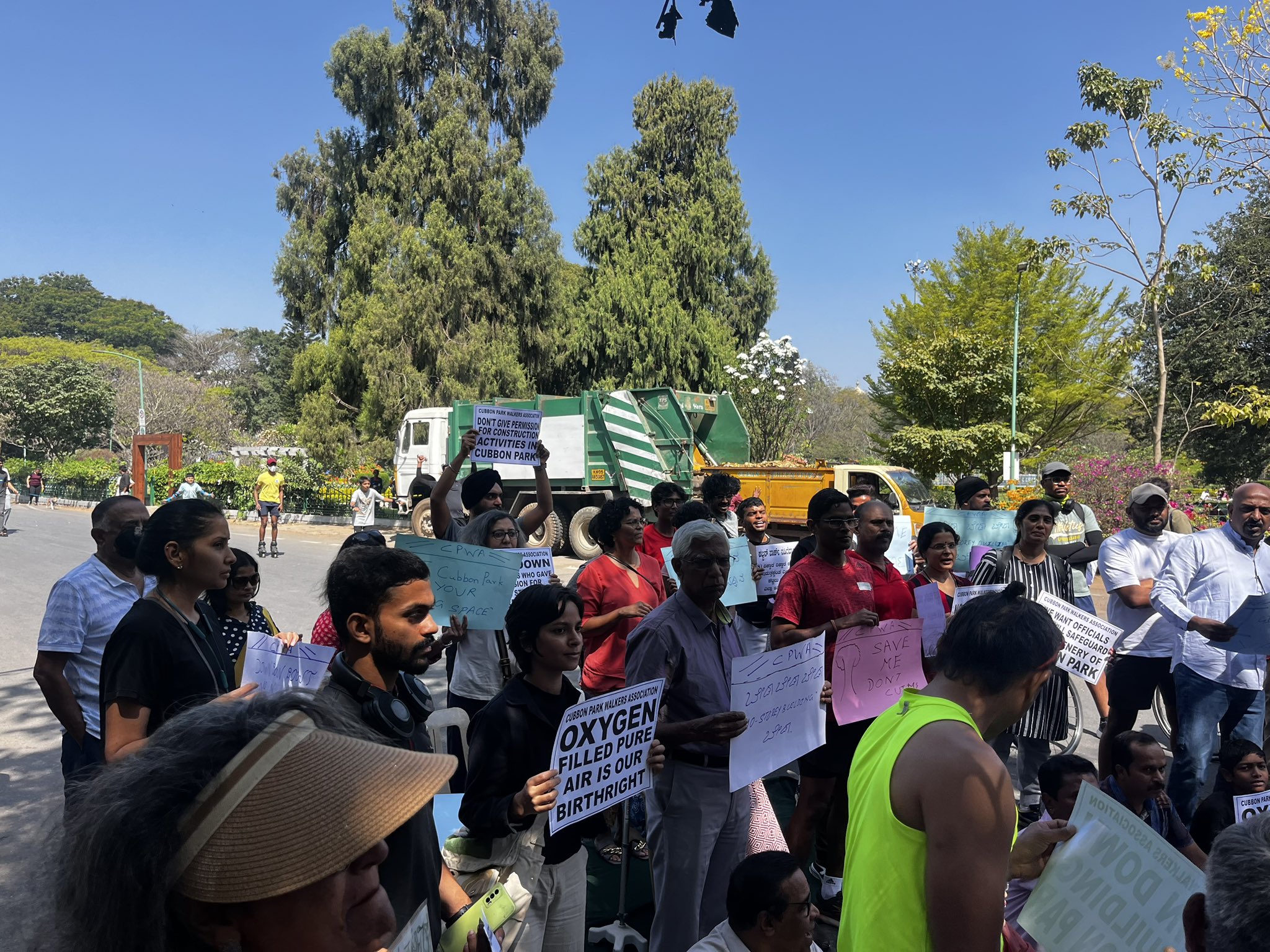
Strap (Page 1): Citizens & activists unite as HAL’s bid to axe 155 trees sparks fresh alarms over Bangaloreu’s fast-shrinking green cover
Strap (Page 8&9): After repeated green losses across the city, HAL’s request signals yet another chapter in city’s relentless environmental unravelling
Blurb:
Bangalore once lived by the rhythm of its trees, the shade of rain trees, the scent of nerale, the hush of bamboo groves. Today, those rhythms are punctured by chainsaws, notices, deadlines, and the quiet dread of déjà vu
Byline: Bindu Gopal Rao
First, the lakes vanished. Now, it’s the turn of the trees. Barely a week after 352 trees inside the Bengaluru University campus were marked for the saw, another shock ripples through the city. Hindustan Aeronautics Ltd (HAL) has sought permission from the Greater Bengaluru Authority (GBA) to axe 155 more trees. This time to clear space for a vehicle parking lot at its Management School campus on Doddanekundi Road, Marathahalli.
Much like the BU case, the GBA’s tree officer, also the Deputy Conservator of Forests, has issued a public notice inviting objections. Citizens have 10 short days, till December 18, to push back. And these aren’t just any trees. They are old sentinels, Tora Matti, Green Bamboo, Nerale, Kari Jali, Akesiya, Sihi Hunuse, Rain trees, names that read like a poem, lives that stand like memory.
But memory, in this city, is often the first casualty. And Environmental activist Vijay Nishanth, founder of Project Vruksha Foundation, doesn’t mince words. Cutting trees for parking, he says, is “wrong and far-fetched.”
“A 10-day objection window feels even stranger. The act and the ease of it, signals something darker; tree-felling is getting normalised,” he says. He points to September, when an 8.61-acre green zone at the Bangalore Cantonment Railway Colony was declared a biodiversity heritage site, only to be withdrawn suddenly. “Now, 155 trees face the blade for a parking lot. There is no clarity. And the process for cutting trees must not become a reason to rationalise their felling,” he says.
Srikanth Narasimhan, Founder and General Secretary of the Bengaluru NavaNirmana Party (BNP), argues that the proposal makes no urban sense. “Parking lots don’t outweigh forests. Not even tiny ones,” he says. He adds that the GBA, being a planning authority, should have roped in the city corporation. “Or better, rejected the proposal outright. Bangalore, has already lost too much,” he sighs.
He is referring to a grim reality the Indian Institute of Science (IISc) mapped earlier this year. A satellite-based study that stripped away illusion to reveal uncomfortable truth. Within BBMP limits, tree cover has fallen from 30.1% in 2006 to 26.1% in 2019. An overall dip of 4%, amounting to nearly 2,800 hectares lost. A slow, steady thinning of the city’s green crown.
Green lungs on the line
Bangalore once lived by the rhythm of its trees, the shade of rain trees, the scent of nerale, the hush of bamboo groves. Today, those rhythms are punctured by chainsaws, notices, deadlines, and the quiet dread of déjà vu.
A Central Pollution Control Board (CPCB) report submitted to the National Green Tribunal (NGT) in March 2025 lays it out plainly – the city has far less forest cover than other mega metros, Delhi, Hyderabad, Mumbai.
Experts say the crisis isn’t Delhi-level yet but the road ahead feels familiar. Keep swinging the axe, they warn, and Bangalore may soon be gasping for the same thin air. Ecologist and ornithologist Dr M.B. Krishna doesn’t sugarcoat the reality. “Trees aren’t ornaments,” he reminds us. “They are oxygen engines. Life-support systems. Silent hosts to countless organisms that reveal what’s poisoning our environment,” he adds.
Krishna asks the questions no one in power seems willing to face. “Why cut centuries of life for cars? Why carve out a parking bay when the campus already has wide, looping roads with barely any traffic? Park the cars there,” he says.
On the ground, civic voices are sounding the alarm louder. Aditya Yeluru, Ward Leader from AECS Layout, calls this moment what it is, “the dawn of an ecological crisis.” He argues that removing 155 large, critical trees for a corporate parking lot is not development, but a disaster dressed up in formals. “These aren’t shrubs; they’re our green lungs. Together, these trees generate 17 tonnes of pure oxygen every year. A sapling planted today won’t match a single rain tree’s output for 15 to 20 years,” he reminds.
Green vs grey
As Bangalore’s streets gasp beneath the weight of unregulated parking, a new plan is quietly taking shape. How about redrawing the city’s map of mobility? The GBA is now eyeing spaces within the old BBMP limits to park the city’s exploding fleet of two-wheelers, alongside additional bays for cars and bicycles. A seemingly simple solution, except for the shadow it casts – the threat of losing yet another slice of the city’s thinning green cover.
In a metropolis where trees often fall before traffic does, the proposal lands like a jolt. For many residents, it amplifies a familiar ache; the sense of a city trading its soul for more steel and space.
Whitefield resident Anna Davis calls the moment a test of Bangalore’s conscience. Alternative parking, she says, isn’t a luxury but the only pragmatic path for an ever-expanding city.
“HAL and the city authorities must prioritise sustainable transport planning and protect the city’s shrinking green cover. I urge the Tree Expert Committee and the GBA to reject this proposal and explore alternatives that do not involve tree felling. Our city’s future depends on the choices we make today,” she tells us. Her words ring like a warning bell – plant foresight now, or pay for the deficit later.
Environmentalists, too, are unwilling to let the axe fall without a fight. Lt Commander (Retd) Deokant Payasi, Co-Founder and CEO of SayTrees, says the city must innovate its way out of this chokehold. Vertical parking, expanded public transport, reduced dependency on vehicles inside large campuses; the options exist, he argues, if only the will does.
“Even if these solutions today may seem a bit costly, but the opportunity cost of losing these trees may be way higher than that. Also, alternate sites must be found and plantation must be initiated to offset these tree losses before we even think of offloading them,” he adds.
At the neighbourhood level, the ask is even more specific and urgent. Ward Leader Yeluru demands nothing less than a strict 1:10 compensatory afforestation norm.
“The corporation must adhere to the standard norm of planting 1,550 native saplings (10 for each one lost) in a designated, local area to begin replacing the biomass. Prioritise translocation; the largest, most valuable trees, particularly the rain trees and nerale, must be translocated rather than cut,” he insists.
The city now stands at a fork – one road paved with quick fixes, the other shaded by the promise of ecological responsibility. The choice, as Anna reminds us, will echo through Bangalore’s future long after the traffic jams have cleared.