
Unboxing 2026 nears
Strap: Starting mid-Jan, UBLR 2026 will spotlight Bangalore’s leap from imagination to impact through climate solutions & citywide cultural celebrations
Blurb:
UBLR has always been more than the sum of its events. Its true legacy lives in the frameworks it leaves behind. Over the years, it has built repeatable, collaborative, multi-stakeholder models that many global cities can only aspire to
Byline: Bindu Gopal Rao
Bangalore is getting ready to press unbox again. From January 16 to 26, UnboxingBLR (UBLR) returns, not as a festival; not even as a civic initiative, but as a full-blown city machinery for imagination.
If Bangalore today is globally benchmarked for liveability, inclusion, creativity, and innovation, UBLR is the force trying to stitch those bragging rights into everyday life. Its track record is already a quiet revolution – the Namma Bengaluru Challenge (NBC), BLR Hubba, the Code to Culture podcast, the WeAreCity report, Church Street’s pedestrian success, and the soon-to-rise Startup & Tech Museum.
In a city that builds world software but wrestles with local anxieties, UBLR has become a rare framework that binds government, industry, civil society and citizens together. Now, as 2026 rolls in, the question is simple – what’s new this yearand what does UBLR’s growing legacy mean for the Bengaluru of tomorrow? Let’s dive in…
The Big Reveal: What’s new in 2026
UBLR’s centrepiece this year is a sharper, more climate-driven edition of the Namma Bengaluru Challenge (NBC ’26). The pitch is bold – treat the entire city as a sandbox for climate and civic innovation. The model is rigorous ripe with clear problem statements, vetted accelerators, technical and final juries, and pilots anchored in public agencies and industry. Bangalore’s startups won’t just be chasing valuations; they’ll be solving real civic puzzles across waste, water, air, construction and mobility.
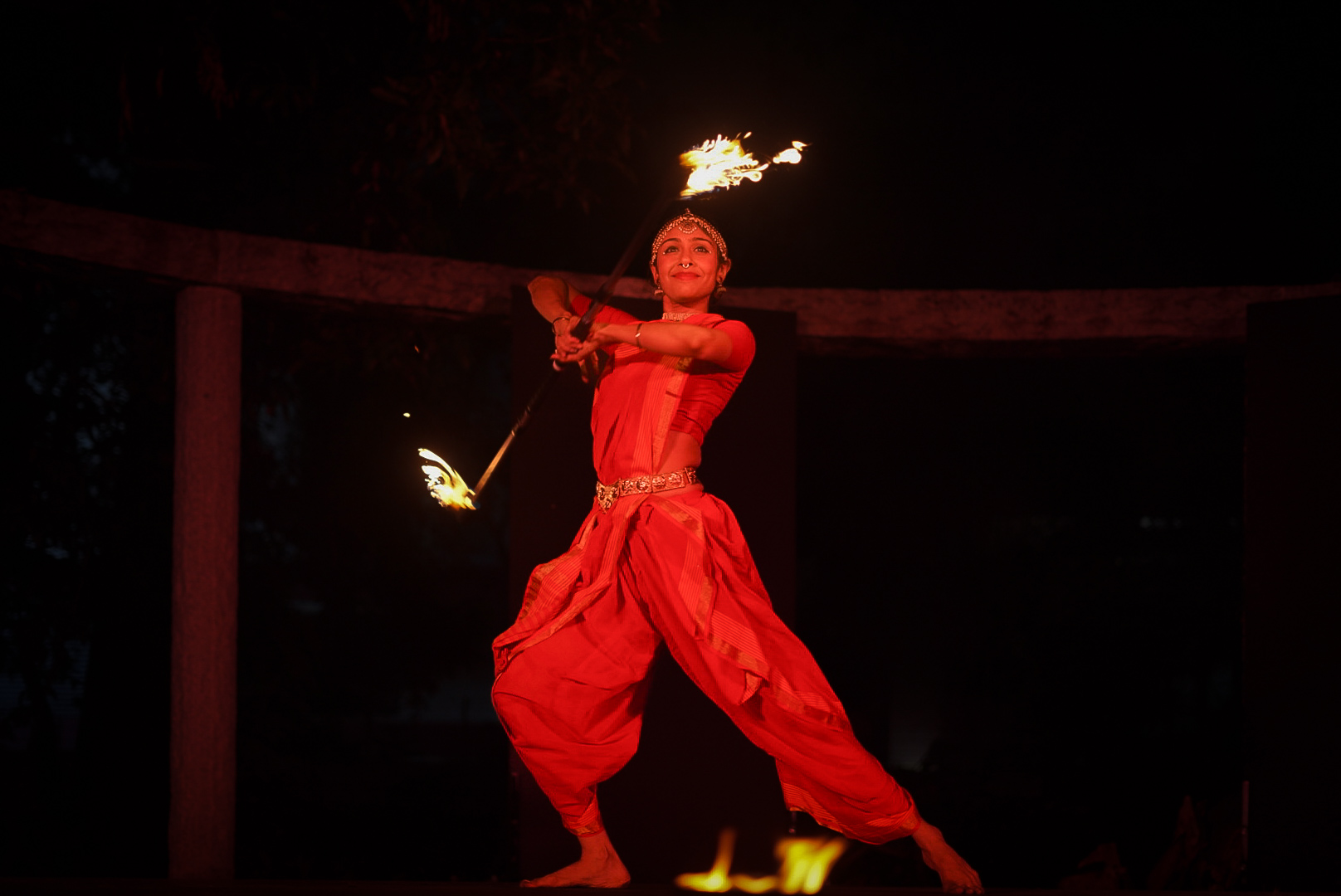
BLR Hubba, the cultural counterpart arrives with equal ambition. In 2026, the festival of festivals, returns bigger than ever. Twelve sub-festivals, 250 events, 20+ venues across the city, including Freedom Park, BIC, NGMA, ADA Rangamandira, Ravindra Kalakshetra to neighbourhood gems like Panchavati and Yuvaka Sangha, you name it. A cultural map so dense it feels like the city has invented its own pulse.
But 2026 marks a philosophical shift. BLR Hubba is no longer a curated calendar. Today, it’s becoming a public celebration, deeply tied to neighbourhoods, languages, intergenerational voices and lived creativity. Everything is free, open to the public, and running on first-come first-served registration. The scale is civic, but the mood is intimate.
As Chief Facilitator V. Ravichandar frames it, “BLR Hubba 2026 promises a city rediscovering itself through its own streets. A counter-narrative to the stress, the traffic, the transactional churn; an attempt to give Bangalore’s its soul back.”
And then comes a landmark-in-the-making – MIST, India’s first Museum of Innovation, Startups & Technology. Set inside a historic switchgear factory shed on the 105-acre NGEF campus (65 acres of green cover), this adaptive reuse project dedicates around 12,000 sq. m to the Startup Tech Museum and 11,000 sq. m to Innoverse, a deep-tech innovation campus.
It’s not just a museum but an institutional memory for a city that has shaped India’s software century. A place for young Bangaloreans to see themselves as innovators in a story still being written.
A city that learns how to make itself
UBLR has always been more than the sum of its events. Its true legacy lives in the frameworks it leaves behind. Over the years, it has built repeatable, collaborative, multi-stakeholder models that many global cities can only aspire to.
NBC ’26 embodies that spirit; not a contest, but a city-led acceleration framework that nudges ideas into action. For instance, BLR Hubba widens that canvas, emerging as a citywide cultural umbrella that threads together sub-festivals, curators, venues and communities into one textured tapestry.
The WeAreCity data report deepens the story, functioning as a public-intelligence engine that helps Bengaluru read its own shifts and trends. And the Church Street pedestrianisation pilot stands as proof-of-concept for what public space can become, sparking a citywide conversation on walkability and urban possibility.
As Malini Goyal, Co-Founder & CEO, puts it, these models work because they share one logic, clear problem statements, broad coalitions, open participation, and strong storytelling.
“UBLR offers Bengaluru, and potentially other cities, a set of templates for how to mobilise public imagination, attract innovators, and align policies and partnerships around shared goals,” she says.
Add to this the partnership ecosystem, Government of Karnataka, GBA, Department of ITBT, public and private institutions, and UBLR becomes a coordinated civic machine. Participation isn’t symbolic; it’s structural. From attending a neighbourhood festival to backing a climate startup, it reframes belonging as city-making.
The countdown begins
Ten days. Twelve sub-festivals. 250 events. Dozens of venues. One city trying to open itself again—this time wider. UBLR 2026 isn’t asking Bangalore to look forward. It’s asking the city to look inwards its culture, its climate, its creative grit and unbox what it already has. In a city that reinvents the world every day, perhaps the biggest revelation left is discovering itself.
UBLR’s leaders speak of a Bangalore where competitiveness isn’t measured in GDP figures but in cultural capital, adaptive governance, deep-tech capability, and climate responsibility. Chairman & Co-Founder Prashanth Prakash sums it up as the future. “Competitiveness is not just about GDP or valuations; it is about becoming strong cultural capital, adaptive governance, deep tech capability, and an ecosystem where climate responsibility and innovation are inseparable,” he says.
BOX –
- What: BLR Hubba – 250 events across 20+ venues
- When: 16 to 25 January 2026.
- Where: Freedom Park, Bangalore International Centre, Sabha, Prestige Centre for Performing Arts, National Gallery of Modern Art, Panchavati, Alliance Française, Yuvaka Sangha, ADA Rangamandira, Indian Institute of World Culture, Ravindra Kalakshetra, and Indian Heritage Academy.
- Cost: All events are free and open to the public. Registration required for all events (first-come, first-served basis at venues with limited seating).