
Bazaar & beyond
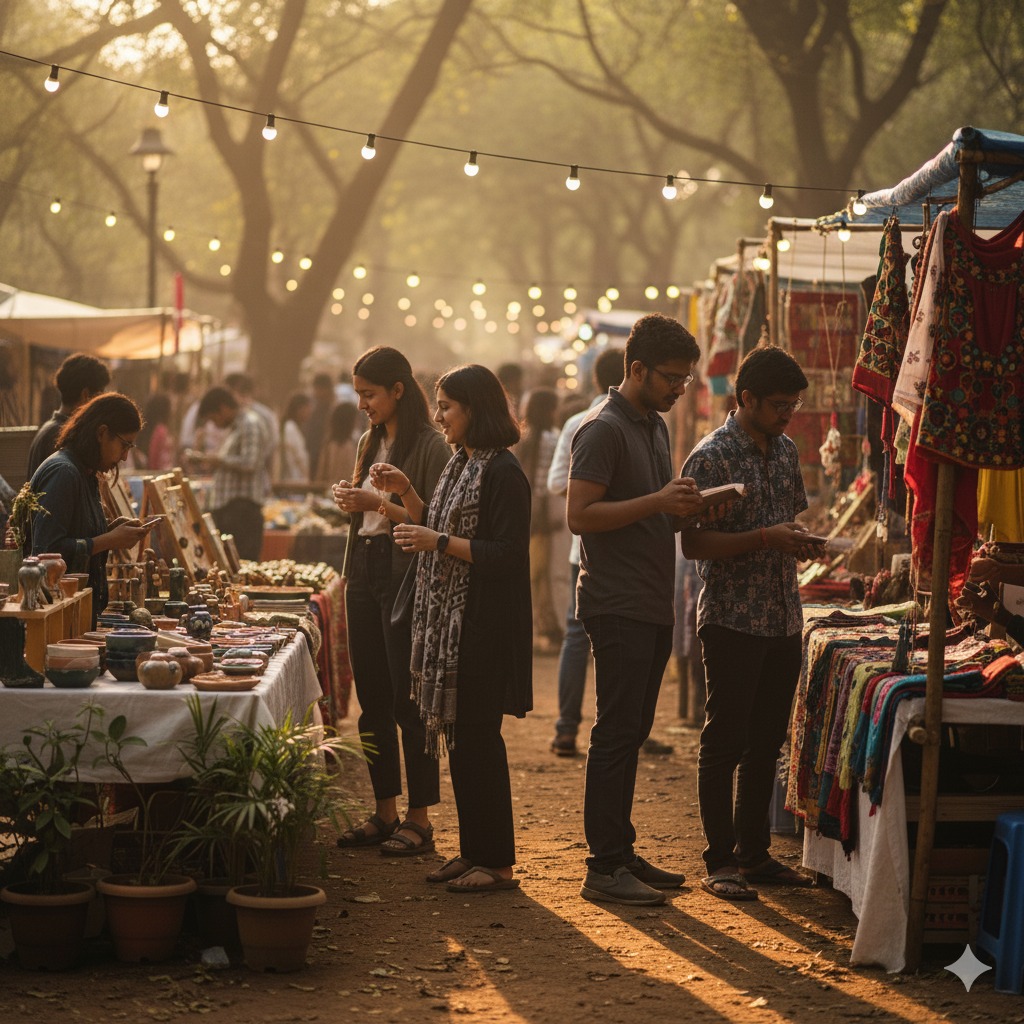
By the time Sunday rolls around, Bangalore begins to exhale. After a week of traffic snarls, deadlines and relentless urban buzz, the city slows just enough for its beloved weekend bazaars to take centre stage.
From curated shopping corners to organic collectives and seasonal festivals, including the much-loved Spring Fling events at the Bangalore International Centre, these markets have become a weekly ritual for city dwellers looking to recharge before Monday arrives.
Yet the tradition runs far deeper than the city’s modern pop-up culture. Some of Bangalore’s weekend bazaars trace their lineage back to the 18th century, when the city was little more than a growing township. Even today, long-standing haunts such as the Cubbon Park flea market continue to host vintage collectors, artisans and food lovers, keeping alive a legacy that has evolved with the city itself.
On a typical Sunday, vendors call out to passers-by, Gen Z friends catch up over food and shopping, strangers bond over unexpected finds, and families stroll through stalls together. The result is a lively communal rhythm. It’s proof that in Bangalore, weekend markets are far more than places to shop; they are a way of life.
Our Bangalore spoke to a fascinating cross-section of Bangaloreans to find out what keeps them coming back to the city’s bustling Sunday bazaars.
‘This is where Gen Z reboots’
For many students in Bangalore, the city’s weekend bazaars offer more than just a place to browse and shop. For them, they serve as a brief escape from the pressures of academic life. Bharatesh Patel, Head of Student Services at S-VYASA University, says these markets have quietly become a refuge for young people navigating the city’s fast pace.
“In the city’s frenetic pace, Sunday markets become anchors to rewind, pause, breathe and reconnect in the middle of our hyper-digital, always-on lives,” Patel says, adding, “On weekends, some of our university friends head to organic bazaars for a mix of shopping, fun and street-eats. The vibrant flavours and tantalising aromas entice as you enjoy the chill vibe of bustling city night markets.”
He adds that students often hunt for quirky outfits, retro revivals and reinvented handicrafts while soaking in the lively ambience.
“Stepping out of routine reduces stress and prevents burnout. We bond over food, click pictures, attend live performances and share moments that feel authentic,” he says. He adds that the very act of just ‘being’ somewhere without productivity pressure becomes a form of therapeutic recreation. “It an unwind mode after a hectic week of classes and assignments,” he asserts.
Beyond the bustle and bargains, weekend bazaars also foster a sense of community. “I enjoy catching up with friends or attending workshops like photography or dance, where I can connect with like-minded people,” Patel says.
‘Dragged then, drawn now’
For Meghana Doddiplalle, a student from Bangalore, weekend bazaars and malls have slowly transformed from routine “errands” into plans in their own right. Not elaborate, calendar-blocking plans, but just the casual “let’s-step-out-for-a-while” kind. Yet, more often than not, that “while” stretches into three easy hours of wandering, browsing and talking.
The shift, she says, is subtle but significant. For young people, having a “third place” beyond school and home matters more than ever. “A place to disconnect, reconnect, rest, rejuvenate and socialise — otherwise the only other option for most Gen Z is the internet,” Meghana explains.
Ironically, she remembers dreading these outings as a child, especially when her mother insisted on taking her to weekend exhibitions. Today, the same spaces hold a completely different charm.
“Somewhere between growing up and getting my own pocket money, something shifted,” she says, adding, “That accidental stretching of time isn’t random. It says something about what these spaces have become for us.”
What draws her back, however, is the atmosphere itself. Meghana believes these spaces gently pull people into the present moment. “It’s almost like a break from overthinking,” she says. “You’re not worrying about tomorrow’s deadlines — you’re just deciding between momos or chaat.”
The bazaar brain effect
As pop-up markets and themed bazaars increasingly dot Bangalore’s urban landscape, their rapid rise is also prompting a few uncomfortable questions and drawing a fair share of sceptics.
According to Medha Tonapi, psychologist and emotional wellness advocate, Gen Z does not simply walk into malls or pop-up markets; they step into highly engineered stimulation zones. These environments, she explains, are deliberately designed to hold attention.
Controlled lighting, curated music, influencer culture, brand storytelling, bustling food courts, interactive displays and crowd energy all operate together, activating the brain’s reward circuits.
The result is a steady stream of dopamine stimulation, making such spaces one of the most powerful real-world platforms for marketing and influencing young minds today, Tonapi warns.
“When stimulation becomes constant, the brain’s capacity for deep thinking, sustained attention and independent judgment begins to decline,” Tonapi explains.
At the same time, she believes the growing presence of pop-up markets is shaping identity, preferences and decision-making patterns among adolescents and young adults.
“Across cities, we are raising a generation that is highly engaged, yet increasingly uncomfortable with silence, patience or slow thinking,” she says, noting that while such spaces build excitement and connection, they may also reduce room for cognitive reasoning.
Yet Tonapi stresses that the story is not entirely cautionary. Used wisely, these spaces can also help young people explore themselves and their interests. The real concern, she argues, is not consumerism but cognition.