
Fallen icons
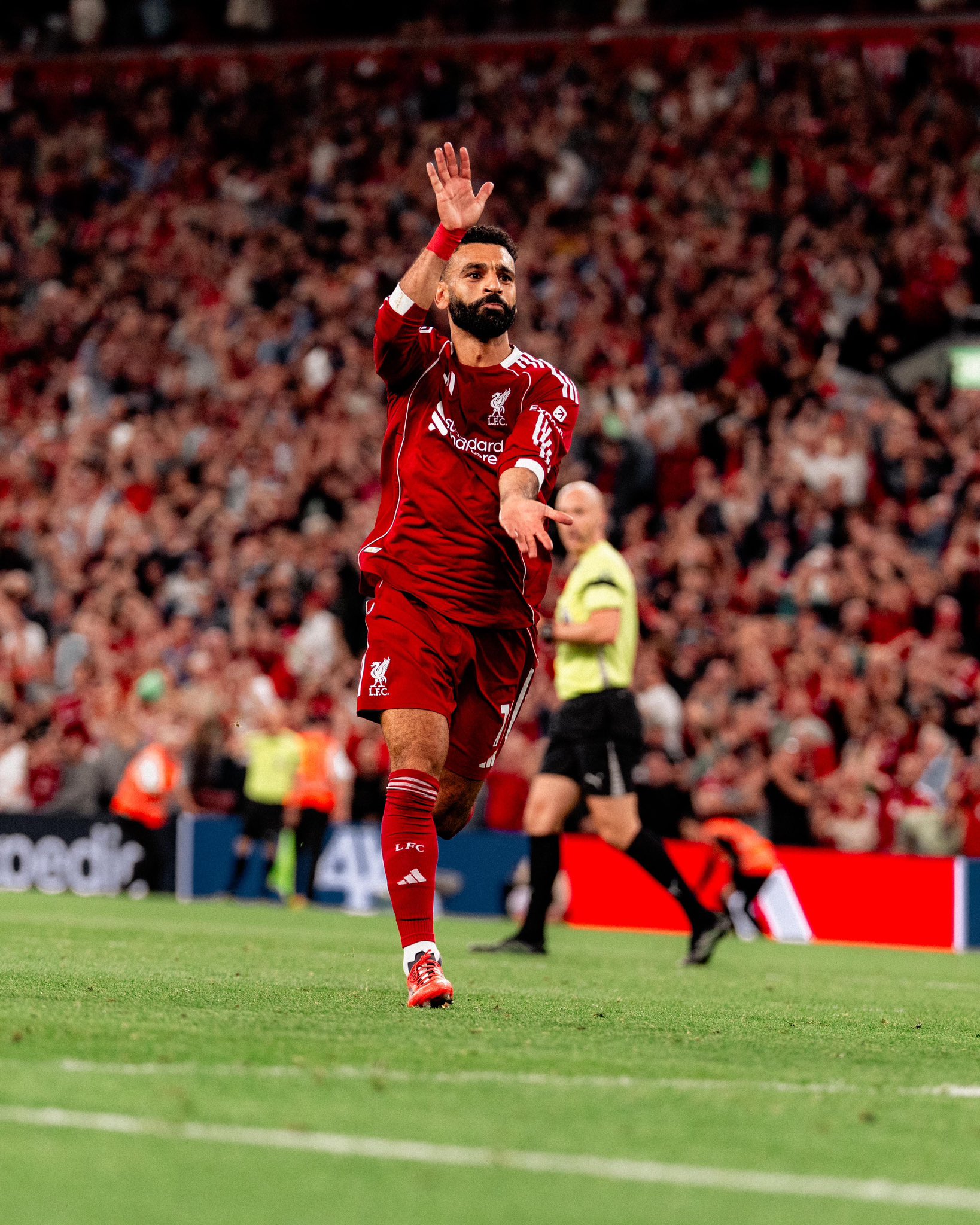
Strap: Mohamed Salah’s explosive interview throws the spotlight back on club football’s uncertainty; how much loyalty is too much?
Blurb:
Salah’s storm recalls Ronaldo’s dramatic 2022 meltdown, when his interview with Piers Morgan unleashed a shockwave that rattled Manchester United’s core
Byline: Rakesh Ganesh
Football may be a theatre of joy, but its script can twist without warning. In an age where fans and pundits are primed to pounce, a single misstep is all it takes for a player to go from adored to attacked.
The game worships its icons, yet trembles at their honesty, because few betrayals sting deeper than when a club legend turns on the very institution that once crowned him. Cristiano Ronaldo did it at Manchester United. Now Mohamed Salah, Liverpool’s modern-day talisman, has stepped onto that same turbulent path. And they’re not alone. In recent years, several stars have found themselves on the receiving end of their own club’s wrath. Today, we revisit those stories.
Mo Salah
First, Mo. The Egyptian King didn’t bother with subtlety in his latest interview. His words cut straight through the noise, “thrown under the bus”, “no relationship with the manager”, “someone doesn’t want me here.” The kind of explosive lines fans screenshot, share, argue over, and obsess about long after the interview fades.
And they landed at the worst possible moment for Liverpool, a club already wobbling more than it has in years. This is the same Liverpool that, just last season, celebrated a Premier League title in Arne Slot’s first year after Klopp. But the aura evaporated quickly. The champions staggered through a patchy league run and looked alarmingly brittle in Europe.
Into this brewing storm, Salah dropped his public grenade, and the fallout was immediate. Liverpool’s reaction was icy and decisive. Salah was disciplined and left out of the squad to face Inter Milan, not even allowed on the flight to Italy. It was a message from the club and from Slot, that the boundaries had been crossed.
The manager didn’t sugarcoat it either, “I have no clue whether he’ll play again… I’m calm, I’m polite, but that doesn’t mean I’m weak.” Leaving Salah out wasn’t a tactical tweak. It was symbolism in its purest form, a club drawing its line in the sand against its greatest modern icon.
Cristiano Ronaldo
What’s happening at Liverpool feels uncannily familiar, almost like a replay of Cristiano Ronaldo’s dramatic rupture with Manchester United. Back in November 2022, Ronaldo sat opposite Piers Morgan and unleashed one of the most incendiary interviews the sport had ever witnessed.
He spoke of feeling “betrayed”, accused senior figures of plotting his exit, and flatly stated he had “no respect” for Erik ten Hag, insisting the manager had failed to respect him first. It wasn’t just a grievance; it was a club icon setting fire to the very foundation that once immortalised him.
The backlash came instantly. United legends and Premier League greats, Gary Neville, Wayne Rooney, Paul Scholes lined up to condemn him. Some called it selfish, others called it heartbreaking, but the consensus was clear – Ronaldo had stepped over a line that few football legends ever dare to approach.
Mesut Özil
Not every rupture begins with a player lighting the fuse. Sometimes it’s the club that delivers the coldest cut. Mesut Özil, Arsenal’s master craftsman for seven-and-a-half years, was one of the Premier League’s great entertainers, a playmaker who bent games to his will and stayed loyal to the Gunners even through years barren of major trophies.
Loyalty that, granted, came with a hefty wage packet. Still, few could deny he had been one of Arsenal’s defining figures of the decade. Yet his North London story ended not with applause, but with a door quietly slammed shut.
When Mikel Arteta omitted Özil from Arsenal’s registered squad for the 2020–21 season, the shockwaves were instant. The timing was even harsher, the decision came just days before the summer transfer window closed, leaving Özil stranded, unable to engineer a move elsewhere.
It wasn’t a tactical choice; it was a message. Arteta simply did not want him involved in any competition. By January 2021, the inevitable happened. Özil walked away as a free agent and headed to Fenerbahçe, his Arsenal chapter closing not with ceremony, but with silence.
Iker Casillas
Iker Casillas isn’t just a Real Madrid legend, he is part of the club’s very identity. One of the greatest goalkeepers of the modern era, he guarded Los Blancos’ goal for nearly his entire career, amassing 725 appearances, three Champions League crowns, and five La Liga titles. So, when the time finally came for him to say goodbye, fans imagined a grand farewell befitting a man of his stature.
What they got instead was heartbreak. Real Madrid offered Casillas no ceremony, no tribute, no roar of the Bernabéu behind him. He sat alone at a press conference, stripped of the celebration he had earned, surrounded not by trophies and applause but by silence. The club captain, the man who had lifted Real Madrid’s greatest prizes, broke down in tears, not from nostalgia, but from neglect.
The backlash was immediate and fierce. Accusations of mistreatment flooded in, painting the club in a deeply unflattering light. Only then did Real Madrid scramble to repair the damage, hastily arranging an “official” farewell the following week, this time with fans and a façade of appreciation. But for many, the wound had already been opened and the legend had already walked away.
Arjen Robben
Real Madrid’s obsession with superstar signings has often blinded them to the brilliance already in their dressing room and Arjen Robben’s exit remains one of the clearest examples. In 2009, the Dutch winger found himself swept aside in the club’s glittering pursuit of Cristiano Ronaldo and Kaká.
Robben and compatriot Wesley Sneijder were sacrificed to clear the stage, not because they lacked quality, but because Madrid wanted a shinier marquee. This, despite Robben delivering a strong 2008–09 season – eight goals, ten assists, and 37 dynamic performances across competitions.
He was thriving, settled, and unquestionably valuable. Yet, that summer, he was pushed out, sold to Bayern Munich for €25 million, and crucially, against his will. Robben later captured the sting of that decision in a single, brutally honest reflection, “I felt very comfortable there and played very well, but when politics come into play and you don’t get a real chance, you have to decide whether to keep fighting or continue your career elsewhere.” Madrid chose their new stars. Robben chose to resurrect himself, and the rest is history.