
Focus: Hate speech
Strap: Karnataka’s new Bill lands in a divided world, where nations draw speech boundaries differently and consequences often fall unevenly
Blurb:
Free-speech advocates warn that vague clauses can chill legitimate expression. Around the world, some governments have even used hate-speech laws to target political rivals or minority voices. What starts as protection can quickly feel like suppression
Byline: Ravi Kiran
Karnataka lit a fresh political fuse midweek, tabling the Karnataka Hate Speech and Hate Crimes (Prevention and Control) Bill, 2025, a law born out of blood on the coast, protests in the House and a nation debating where free speech ends and dangerous speech begins.
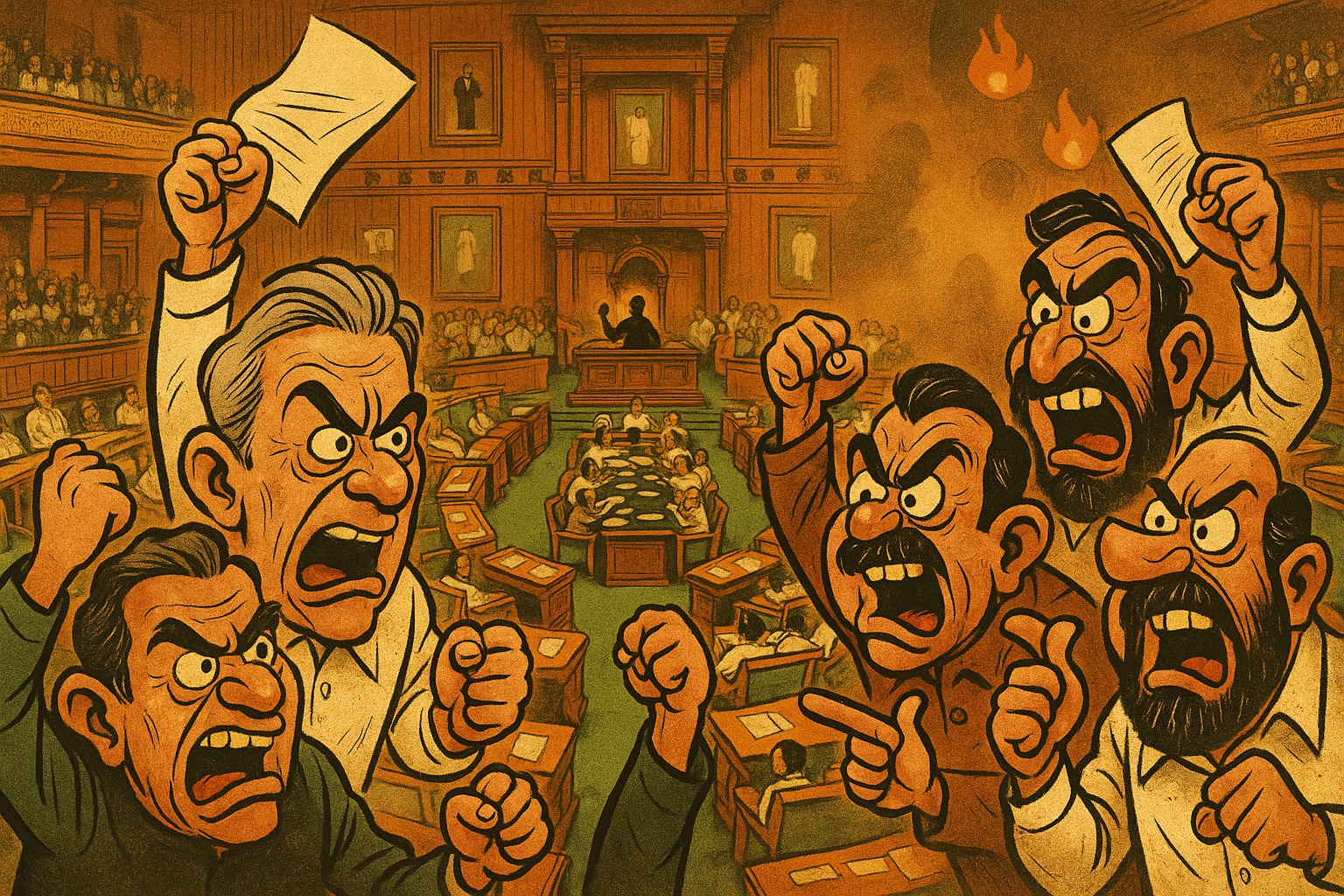
State Law and Parliamentary Affairs Minister H. K. Patil placed the Bill before the Assembly on Wednesday, triggering an instant saffron storm. Speaker U. T. Khader called for voices, “yes” if you support tabling and “no” if you don’t, and the BJP benches erupted.
Leaders shouted that they would never agree. Some called the Bill “completely unnecessary,” others demanded a full discussion. The uproar grew so loud Khader had to adjourn the House for 10 minutes.
Behind the din lies the trigger. A series of communal revenge killings in Mangaluru jolted the state and pushed the Congress government to act. A special force now watches the coast, while separate wings track social media to stop sparks from becoming street violence.
The Bill itself is blunt. Those convicted of hate crimes face up to three years in jail, a fine up to Rs 5,000, or both. Offences are non-cognisable, non-bailable and tried before a first-class magistrate. The draft defines hate crime as causing harm, inciting harm or spreading hatred based on religion, race, caste, community, sex, gender, sexual orientation, place of birth, residence, language, disability or tribe. Any act rooted in prejudice against these identities qualifies.
A world split on free speech
But Karnataka’s move lands in the middle of a global argument that’s far from settled. Around the world, countries draw their red lines very differently. Europe, shaped by memories of genocide and fascism, keeps its boundaries tight, while in the United States, it’s the opposite.
For instance, Germany’s Section 130 criminalises incitement against racial, religious and ethnic groups, with penalties that range from fines to jail time. France’s 1881 Press Law bans public insults or incitement to hatred based on origin, race, religion, nationality, sex, sexual orientation or disability.
Across the Atlantic, the United States takes the exact opposite route. The First Amendment protects most speech, even when it is offensive or hateful, stepping in only when there’s a direct threat or a call for imminent violence. The result is a country that often tolerates the intolerable in the name of absolute freedom.
Elsewhere, the picture is mixed. Many Asian, African and Middle Eastern nations have hate-speech laws, but enforcement often bends to politics or culture. Hungary criminalises hate speech but rarely uses the law. In several Asian countries, the rules exist but are unevenly applied. At times, these laws shield the powerful; at other times, they are used to silence critics.
Rights Vs risks
Debates around hate-speech laws always circle back to one thorny issue, and Karnataka’s new move is no exception – who decides what crosses the line? And could loosely written or tightly enforced rules end up silencing dissent instead of protecting the vulnerable?
Free-speech advocates warn that vague clauses can chill legitimate expression. Around the world, some governments have even used hate-speech laws to target political rivals or minority voices. What starts as protection can quickly feel like suppression.
But supporters of tougher laws argue the opposite. They say that unchecked hate leads to real-world harm. Words can spark violence. Echo chambers can radicalise and when the social fabric tears, no democracy escapes unscarred.
Which brings the focus back to Karnataka. The coastal killings showed how fast rhetoric can spill into retaliation. The government believes a sharper legal tool could slow that cycle. Still, laws alone can’t uproot hate. Education, public dialogue and community work have to walk alongside enforcement. The global lesson is clear: legislation can restrain, but only society can rebuild.
As Karnataka enters this fraught arena, it steps into a world still struggling with the same dilemma – how to protect citizens from hate without choking the freedoms that define democracy. The line is thin. The stakes are rising.